
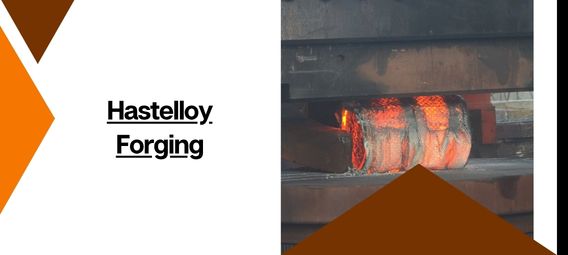
A Hastelloy Forging is a nickel-based alloy component shaped under compressive force for service in acids, chlorides, and high-temperature process streams. Grade choice decides service life. Specify the wrong alloy for a hot hydrochloric line and pitting shows up within months, while the correct grade runs for years inside the same vessel under identical duty. Engineers who match alloy, forging route, and standard to real operating conditions get corrosion resistance and mechanical strength out of a single part. That combination explains why ASTM B564 Hastelloy Forgings appear on so many project specifications for aggressive chemical service.
What Is a Hastelloy Forging?
A Hastelloy Forging is a wrought nickel alloy part produced by pressing or hammering heated metal into shape instead of casting it or cutting it from solid bar. Hastelloy Alloy Forgings cover flanges, rings, shafts, valve bodies, stub ends, and custom profiles built to drawing. Hastelloy names a family of nickel-based alloys, each balanced with molybdenum, chromium, and tungsten in different ratios, so one grade withstands reducing acids while another resists oxidising chloride media. Forging closes internal porosity and aligns grain flow along the load path, which lifts toughness well above a cast equivalent of the same chemistry. Four inputs set the final properties: alloy grade, forging method, heat treatment, and quality control. Nickel Alloy Forgings delivered without solution-annealing records can carry sensitised grain boundaries, so paperwork carries the same weight as the metal.
Identify the Right Hastelloy Grade
Grade selection starts with the chemistry inside the equipment.
- Hastelloy C-276 handles a broad span of aggressive chemical environments, covering wet chlorine, hypochlorite, and mixed acid streams.
- Hastelloy C-22 suits duty where localised corrosion and oxidising conditions dominate, such as ferric chloride or nitric-bearing media.
- Hastelloy B-2 and B-3 serve reducing-acid applications, with performance tied directly to acid concentration and operating temperature.
- Other Hastelloy grades cover specialised requirements when service conditions fall outside the ranges above.
These grades do not substitute for one another. Test the proposed alloy against the actual process environment, upset conditions included, before releasing the order.
Evaluate Corrosion and Temperature Requirements
Corrosion assessment needs six inputs before anyone confirms an alloy. Start with the chemical species present and their concentration, then record chloride content, since chlorides drive pitting and crevice attack at weld roots and gasket faces. Establish whether the environment runs oxidising or reducing, because that single distinction separates the B-series from the C-series. Log normal operating temperature and peak excursion temperature separately. Add line pressure and process-fluid velocity. Account for contamination and mixed-chemical exposure during cleaning cycles or batch changeovers, where the medium differs from the design case. Resistance shifts with grade, concentration, and temperature together.
Check Mechanical and Design Requirements
Mechanical requirements govern the forging as much as corrosion data does. Set the strength and toughness targets from the design code first, then size the component shape, wall section, and overall dimensions against them. Cyclic duty changes the answer. A flange on a line that thermally cycles twice a day needs fatigue allowance that a static vessel nozzle never requires, and that allowance affects both section thickness and heat-treatment condition. Add machining stock for finished tolerances and sealing faces. Confirm weldability and joining method for the grade selected, since filler metal choice follows the base alloy. Factor installation access and maintenance replacement intervals into the final geometry.
Verify ASTM B564 and ASME SB564 Requirements
ASME SB564 Hastelloy Forgings and their ASTM equivalent carry specific obligations that a purchase order must spell out. Confirm the exact UNS grade and product form, because the specification covers several nickel alloys under one number. Verify dimensional tolerances and mechanical property minimums against the drawing. Check chemical analysis, heat-treatment condition, and the test regime the project demands, including intergranular corrosion testing where applicable. Request material test certificates with heat and lot traceability tied to each piece. Confirm inspection scope and supplementary requirements with the project specification before manufacture starts. Compliance belongs to the individual forging and grade
Choose a Reliable Hastelloy Forgings Supplier
- Experience with nickel alloy forgings across grades and section sizes
- Capacity to supply the required grade, dimensions, and quantity within schedule
- Documented manufacturing and heat-treatment controls at the mill
- In-house inspection and testing facilities, including NDT and corrosion testing
- Material certification and heat-wise traceability on every delivery
- Full compliance with purchase order clauses and project specifications
- Capability for custom forging, machining, and dimensional work to drawing
RENINE METALLOYS manufactures and distributes nickel alloy and special metal products, with in-house facilities for flanges, fasteners, and pipeline equipment.
Conclusion
Seven factors decide the right Hastelloy Forging: alloy grade, corrosion environment, operating temperature, mechanical loading, finished dimensions, applicable standard, and supplier quality systems. Weigh them together, since a grade that solves the chemistry may still fall short on the strength requirement. Material selection done properly at the specification stage keeps equipment running through its design life in demanding industrial service.
Contact RENINE METALLOYS for grade confirmation and a quote on your forging drawing.