
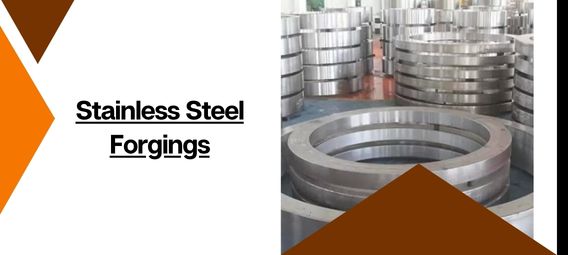
A forging press pushes down on heated stainless steel with thousands of tons of force. The metal flows into shape rather than being cast or cut, which influences its internal structure and mechanical performance. Stainless steel forgings go through this process to refine the grain structure and improve the consistency of the material. This can provide better strength, toughness and fatigue resistance compared with other manufacturing methods when the forging is properly designed and processed. Picking the wrong grade or specification isn’t a small mistake either. It’s often the difference between a flange or shaft performing reliably for years or experiencing premature failure under pressure or repeated loading.
What Are Stainless Steel Forgings?
A stainless steel billet is heated until it becomes sufficiently workable for shaping, usually between 900°C and 1250°C depending on the grade and forging process, and then pressed between dies. Controlled deformation refines the internal structure and can reduce internal discontinuities. Cast components are formed differently: molten metal is poured into a mould, while machined parts begin with bar or other stock material. Forged stainless steel is shaped through controlled deformation, allowing the grain flow to generally follow the component geometry and supporting good mechanical performance under demanding loads.
Key Factors to Consider When Selecting Stainless Steel Forgings
- Material Grade: Grade 304 provides general corrosion resistance, 316 adds molybdenum for improved resistance to chloride-related pitting and crevice corrosion, 321 and 347 are stabilized grades used for elevated-temperature service, and duplex grades combine high strength with good corrosion resistance.
- Operating Environment: Match the grade to what it will actually face, whether that’s humidity, chemical exposure, marine salt spray or changing process temperatures, since corrosion resistance varies by environment.
- Strength Requirements: Check tensile strength, yield strength, toughness and fatigue resistance against the actual loads and cycles the part will experience in service.
- Component Size and Design: Dimensions, wall thickness, geometry, tolerances and machining allowance all need confirming early, because die design and forging requirements depend on these factors.
- Temperature Conditions: The grade needs to retain the required mechanical and corrosion properties across the lowest and highest temperatures it will experience.
Benefits of Stainless Steel Forged Components
Forged parts can provide high strength and toughness compared with cast equivalents, depending on the alloy and manufacturing process. Corrosion resistance still depends primarily on the selected stainless steel grade and service environment. Proper forging can provide a refined grain structure and consistent mechanical properties, supporting fatigue performance under repeated loading. This is important for rotating shafts, pressure-containing components and other highly loaded parts. Batch to batch, properly controlled forged parts can also deliver consistent dimensional and mechanical properties. That is why High Strength Stainless Steel Forgings are widely used for pumps, compressors, flanges and other demanding process equipment.
Stainless Steel Forged Parts for Different Applications
- Oil and gas equipment uses Stainless Steel Forged Parts for wellhead components, valve bodies and flanges operating under high pressure and demanding service conditions.
- Chemical processing plants need forged fittings and vessel components that can withstand aggressive chemicals while maintaining mechanical integrity.
- Power generation turbines use forged shafts and rotor components designed for continuous mechanical loading and thermal cycling.
- Petrochemical plants specify forged flanges and nozzles for high-pressure and high-temperature service.
- Marine and offshore systems rely on forged propeller shafts and subsea fittings that require resistance to chloride-driven corrosion.
- Food and pharmaceutical equipment uses forged fittings where corrosion resistance, cleanability and suitable surface finishes are important.
- Heavy engineering and industrial machinery use forged gears, couplings and structural parts where fatigue resistance under repeated loading is important.
How to Match the Forging Grade to the Application
Grade 304 is suitable for many general corrosion environments, provided chlorides or aggressive chemicals are not a major concern. When chlorides, coastal exposure or chemical processing are involved, 316 generally provides better resistance to pitting and crevice corrosion due to its molybdenum content. For elevated-temperature service, 321 or 347 may be considered because their titanium or niobium stabilization helps reduce the risk of sensitization. When a component needs a combination of high strength and corrosion resistance, duplex grades are often considered because they combine characteristics of austenitic and ferritic stainless steels.
Specifications and Quality Requirements
Forging quality depends on compliance with the correct specification, with ASTM A182 / ASME SA-182 commonly used for forged stainless steel flanges, fittings, valves and similar pressure-containing components. Buyers need to verify dimensional accuracy against drawing tolerances, the required heat treatment, and the surface for laps, cracks or other discontinuities. The forging should comply with the specified grade through chemical analysis and applicable mechanical tests such as tensile, hardness and impact testing. Each batch should also have a Material Test Certificate (MTC) providing traceability to the material heat number and relevant test results.
Common Mistakes to Avoid When Choosing Stainless Steel Forgings
- Choosing the Grade Based Only on Price: Choosing a lower-cost grade can become more expensive later if corrosion or mechanical failure requires replacement.
- Ignoring the Service Environment: Overlooking chloride or chemical exposure can shorten component life.
- Incorrect Dimensions or Tolerances: Incorrect dimensions, poor tolerances or missing machining allowance can increase rework and delays.
- Failing to Specify Heat Treatment: Failing to specify the required heat treatment can affect mechanical properties and fatigue performance.
- Not Verifying Standards and Testing: Failing to verify standards, testing and material certification requirements before ordering can create quality and traceability issues.
Conclusion
Choosing the right stainless steel forging comes down to grade, strength, corrosion resistance, temperature, dimensions and applicable manufacturing standards. Skipping any one of these, whether it’s selecting the wrong grade for chloride exposure or ordering without a material test certificate, can increase the risk of premature performance issues. Matching the material to the actual service conditions from the start helps ensure that the component provides reliable performance over its intended service life.