
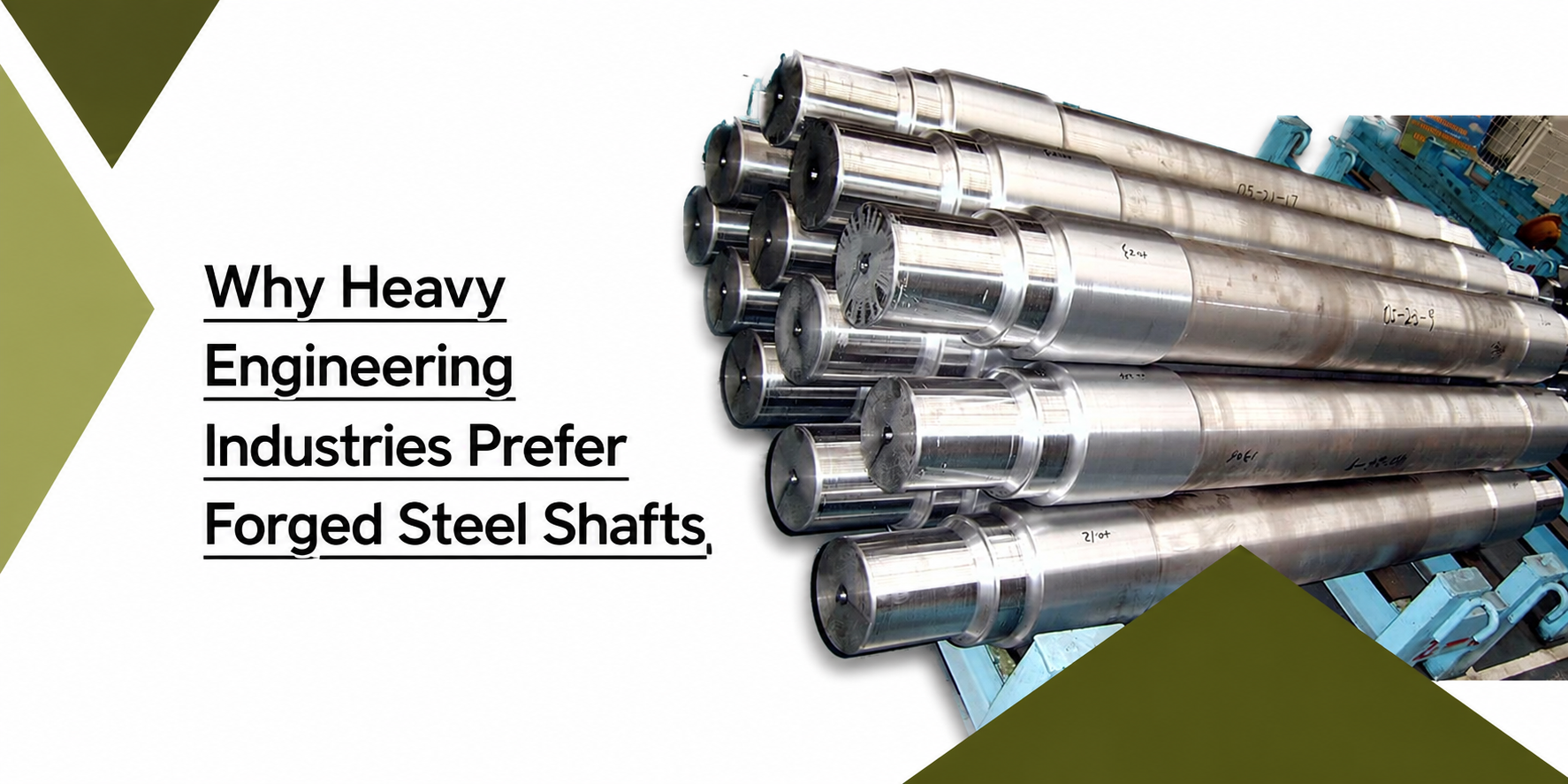
Every piece of rotating equipment needs a shaft to carry power from motor to load. If that shaft cracks, the line stops. A forged steel shaft holds up better because forging pushes the hot steel under heavy pressure, lining the grain up along the direction it actually works in. Cutting from bar or casting does not do this, which is why plants in power, mining, and marine work keep specifying a forged steel shaft.
What Is a Forged Steel Shaft?
A forged steel shaft starts as a steel billet, heated past 1,100°C, then pressed under a hydraulic press to the shape and diameter needed. Heat and pressure close up internal gaps and refine the grain, giving higher tensile strength than a cast shaft of the same size. Common forms include stepped, hollow, and flanged shafts.
Key Manufacturing Stages of a Forged Steel Shaft
There are roughly five stages. Material selection first, then hot forging around 1,200°C, heat treatment for hardness, machining to final tolerance, and ultrasonic inspection before it ships.
Why Forged Steel Shafts Are Preferred in Heavy Engineering Industries
It depends on how the shaft behaves under load, day after day.
Superior Mechanical Strength
The grain runs along the shaft’s length, so a forged steel shaft carries more load before it gives.
Enhanced Fatigue and Impact Resistance
Grain boundaries are tighter after forging. The shaft takes millions of load cycles without cracking suddenly.
Excellent Wear and Durability
Heat treatment leaves the surface harder, which matters where the shaft rubs against something constantly.
High Reliability in Critical Equipment
Properties stay consistent through the section, not just the surface. Fewer surprises, fewer breakdowns.
Key Performance Benefits of Forged Steel Shafts
Grain flow runs with the shaft, so tensile strength rises along the working axis. Voids get pressed out during forging, so cracks have less to start from. A forged steel shaft also carries more torque for its diameter, which is why a smaller forged part often replaces a bulkier cast one.
Applications of Forged Steel Shafts in Heavy Engineering
- Power stations use forged turbine shafts for continuous high speed running.
- Mining sites put them into crushers and hoists, where shock loading is routine.
- Rolling mills need them for repeated torque spikes.
- Ships use forged propeller shafts, mainly for corrosion resistance.
- Cement plants run them in kilns under abrasive dust.
- Oil and gas sites use forged pump shafts for high pressure duty.
Factors Heavy Engineering Industries Consider When Selecting a Forged Steel Shaft
Load and torque decide diameter and forging ratio. Temperature and environment decide whether the alloy needs corrosion resistance. Material grade and heat treatment set final hardness. Surface finish affects how well it seats in a bearing. ASTM or EN compliance gets checked too, mostly for traceability.
Forged Steel Shaft vs Machined or Cast Shafts
Strength and Structural Integrity
Forging lines the grain up along the axis. Casting and bar machining leave it more random, weakening the part.
Resistance to Fatigue and Impact
A forged steel shaft takes shock loading better. Cast shafts carry a higher chance of hidden porosity.
Service Life and Maintenance Requirements
Forged parts tend to run longer before an overhaul is needed.
Cost Efficiency Over the Equipment Lifecycle
The initial cost is slightly high. Fewer failures over the years usually bring the total cost down, though.
Best Practices for Maximizing the Service Life of Forged Steel Shafts
Get alignment right at installation, or the load ends up uneven. Check the shaft regularly so small cracks get caught early. Keep it lubricated and protected from corrosion. Watch the actual running loads, not just the rated limits.
Common Challenges That Forged Steel Shafts Help Overcome
Plants deal with shafts failing early from overloading, fatigue cracks in high stress drives, downtime from wear, and reliability issues under continuous running. A forged steel shaft helps with most of this. Grain structure resists cracks, harder surface slows wear.
Conclusion
A forged steel shaft holds up under continuous load in a way cast and machined alternatives usually cannot match, which is why it gets specified so often. Strength, fatigue resistance, wear resistance, it covers most of what matters here. Get the right grade and treatment for the application, and it should give fewer problems over its working life.