
Corrosive process streams destroy ordinary alloys within months. Plant engineers turn to nickel-molybdenum forgings because standard stainless grades fail under concentrated acids and high-temperature cycling. Hastelloy B3 forgings and Hastelloy C276 forgings both address this, but differently, and picking the wrong one shortens equipment life and inflates maintenance costs. This comparison breaks down composition, corrosion behavior, and strength so buyers can match the alloy to the process.
Understanding Hastelloy B3 Forgings and Hastelloy C276 Forgings
Both alloys belong to the nickel-molybdenum family, built for environments where iron and stainless steel corrode within weeks. Molybdenum content, chromium presence, and iron levels determine which acids each forging tolerates.
What Are Hastelloy B3 Forgings?
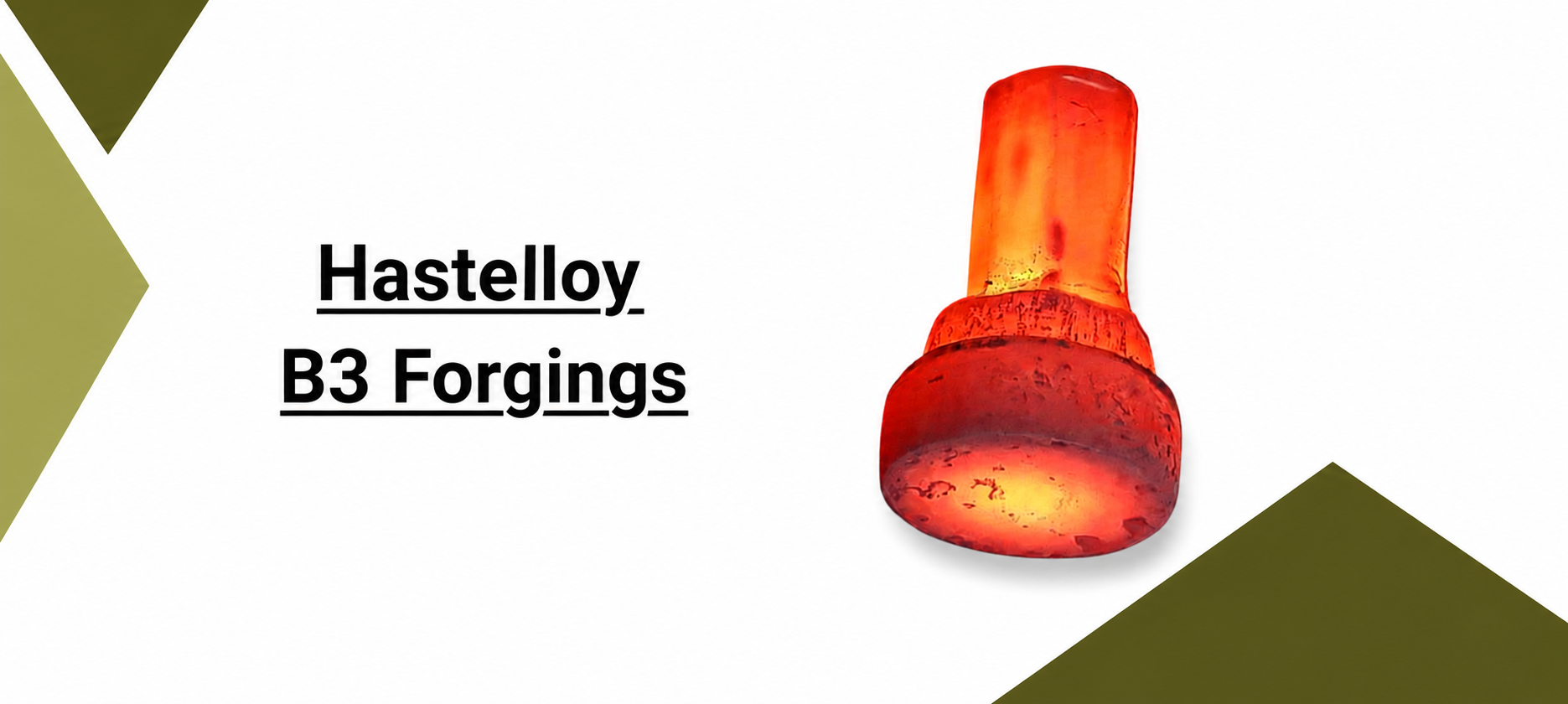
Hastelloy B3 forgings carry 28-30% molybdenum and under 1.5% chromium, built for hydrochloric and sulfuric acid service across a wide concentration range.
What Are Hastelloy C276 Forgings?
Hastelloy C276 forgings combine 14.5-16.5% chromium, 15-17% molybdenum, and 3-4.5% tungsten, handling both oxidizing and reducing media.
Chemical Composition Comparison
Molybdenum, chromium, and iron separate these forgings functionally. Higher molybdenum in Hastelloy B3 forgings targets reducing acids, while chromium in C276 forms a protective oxide layer against oxidizing chemicals.
Role of Molybdenum, Chromium, and Iron
B3’s low chromium sharpens reducing-acid performance. C276’s 4-7% iron and added tungsten improve pitting resistance in chloride-rich streams.
Effect of Alloying Elements on Material Stability
High molybdenum and tungsten in C276 can precipitate secondary phases during slow cooling, so controlled solution annealing after forging preserves corrosion resistance in both grades.
Corrosion Resistance Comparison
Environment determines which grade will be able to withstand. Hastelloy B3 forgings dominate in pure reducing acids; C276 covers mixed and oxidizing streams.
Performance in Reducing Acid Environments
B3 is resistant to hydrochloric acid up to 20% concentration at elevated temperature and is superior to C276 in pure reducing conditions.
Resistance to Oxidizing Chemicals
C276 withstands wet chlorine and nitric acid mixtures where B3’s low chromium leaves it exposed.
Protection Against Pitting and Crevice Corrosion
C276’s tungsten addition raises its pitting resistance above B3, giving it an edge in seawater and brine service.
Mechanical Properties and Strength Comparison
Both forgings begin with similar strength, but one reacts differently to long term heat, and this changes its performance over time.
High-Temperature Stability
C276 resists intermetallic precipitation better than B3 during prolonged exposure between 600°C and 1040°C.
Structural Integrity Under Mechanical Stress
Both alloys have a minimum specification of 40%+ elongation, which provides confidence in flange, valve body and pressure vessel components.
Weldability and Fabrication Characteristics
Both forgings are workable, though each demands specific welding controls to avoid carbide precipitation.
Fabrication Ease
Hastelloy B3 forgings machine and form with standard nickel-alloy tooling and slower feed rates than carbon steel.
Welding Considerations for Industrial Applications
C276 tolerates GTAW and SMAW with minimal post-weld treatment; B3 needs tighter heat input control to limit grain boundary carbide formation.
Heat Treatment and Thermal Stability
Rapid water quenching after solution annealing at 1065-1120°C provides optimum corrosion resistance in both alloys after forging or welding.
Heat Treatment Requirements
Localized corrosion can occur at heat-affected zones if post-weld annealing is omitted for either grade.
Performance at Elevated Temperatures
C276 is stable up to 1040°C for short term tests, B3 is best below 950°C for long term tests.
Industrial Applications of Hastelloy B3 Forgings vs Hastelloy C276 Forgings
- Chemical Processing Plants: B3 handles concentrated hydrochloric acid reactors; C276 covers mixed-acid digesters needing broader resistance.
- Petrochemical and Refinery Equipment: C276 suits sour gas and chloride-heavy streams demanding pitting protection.
- Pollution Control Systems: C276 resists wet scrubber environments with fluctuating oxidizing and reducing conditions.
- Pharmaceutical and Specialty Chemical Manufacturing: Hastelloy B3 forgings support reactors processing hydrochloric acid intermediates at high purity.
Advantages of Hastelloy B3 Forgings Over Hastelloy C276
Hastelloy B3 forgings outperform C276 in pure reducing acid service, particularly concentrated hydrochloric and sulfuric acid at elevated temperature. Post-fabrication thermal stability runs higher in B3 for reducing-only environments, since it avoids the chromium-driven phase instability that affects C276 under similar heat cycles. B3 also shows lower susceptibility to stress-related cracking in hydrochloric acid duty.
When Should You Choose Hastelloy B3 Forgings Instead of Hastelloy C276?
Hastelloy B3 forgings are used in low chloride, reducing streams. C276 is selected for oxidizing agents, chlorine, or mixed acids. Start with peak temperature and acid concentration, then compare lifecycle cost with C276’s wider tolerance and B3’s stronger reducing-acid performance.
Quick Comparison Table: Hastelloy B3 vs Hastelloy C276 Forgings
| Parameter | Hastelloy B3 Forgings | Hastelloy C276 Forgings |
| Chemical Composition | 28-30% Mo, <1.5% Cr | 15-17% Mo, 14.5-16.5% Cr, 3-4.5% W |
| Corrosion Resistance | Strong in reducing acids | Strong in oxidizing/mixed acids |
| High-Temperature Performance | Stable below 950°C | Stable up to 1040°C |
| Mechanical Properties | Tensile min 760 MPa | Tensile min 690-790 MPa |
| Weldability | Needs tight heat input control | Tolerates GTAW/SMAW readily |
| Typical Applications | HCl reactors, pharma intermediates | Refinery and scrubber equipment |
| Ideal Operating Environment | Pure reducing acid service | Mixed oxidizing/reducing service |
Conclusion
Hastelloy B3 forgings and Hastelloy C276 forgings solve different corrosion problems despite sharing a nickel-molybdenum base. B3 wins in concentrated reducing acids; C276 wins where oxidizing chemicals or chlorides enter the stream. The right choice depends on process chemistry, peak operating temperature, and fabrication constraints specific to each installation. Selecting the correct alloy for the correct environment provides reliability of equipment, service life and foreseeable maintenance costs.